

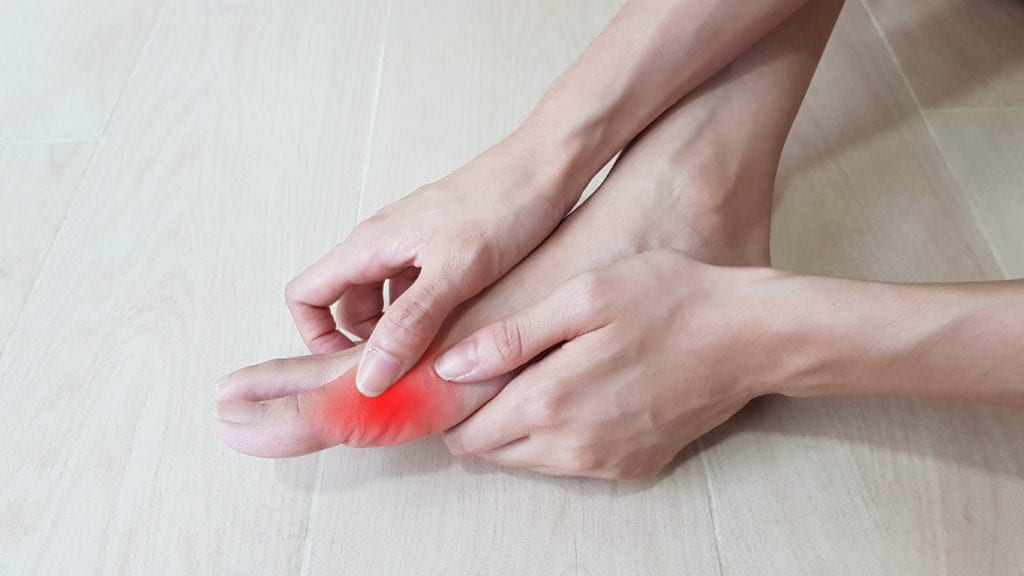
A bunion is a bony bump that forms at the joint at the base of the big toe, and it usually develops slowly over months or years. Since the big toe joint carries much of your body weight when you walk, bunions can impact foot health. Here are some common questions and answers on bunions:
What Are Bunions?
A bunion forms when the big toe shifts toward the second toe, pushing the bone behind it outward. This creates a visible bump along the inside of the foot. The medical term for this is hallux valgus, and it results from a change in bone alignment rather than extra tissue growth.
Several factors play a part. One cause is inherited foot structure, and people with flat feet or loose ligaments may be more likely to develop bunions. Narrow shoes and high heels put pressure on the joint over time. Arthritis and past foot injuries have also been linked to bunions, especially when they affect the foot’s structure or function.
Do They Cause Symptoms?
Some people have bunions and feel no discomfort. Others notice symptoms that range from mild to ongoing. Common signs include:
- A visible bump on the inner side of the foot
- Soreness or pain around the big toe joint
- Swelling, redness, or warmth near the joint
- Calluses where the first and second toes rub together
- Limited movement in the big toe
- Trouble finding shoes that fit comfortably
Pain often increases after long periods of standing or walking, especially in tight shoes. As a bunion progresses, the big toe may press against or cross over the second toe. This shift sometimes leads to hammertoes or skin irritation. A small fluid-filled sac over the bump may also become inflamed; this condition is called bursitis.
How Are They Treated?
Treatment depends on the bunion’s size, the severity of your symptoms, and how much the condition affects your daily routine. Many podiatrists start with conservative options. Nonsurgical treatments include:
- Footwear changes: Shoes with a wide toe box and low heel reduce pressure on the joint.
- Padding: Gel or felt pads over the bump may lower friction.
- Custom orthotics: Inserts help control foot position and spread out pressure.
- Toe spacers or splints: These devices hold the toe in a straighter position, often overnight.
- Medication: Over-the-counter anti-inflammatory medicine may ease pain, and doctors sometimes use corticosteroid injections for bursitis.
Surgery may be recommended if pain continues and interferes with walking or daily tasks. The surgical procedure realigns the bones, ligaments, and tendons of the big toe joint, and the technique depends on the bunion’s severity and your health history. Recovery time varies. Many patients need several weeks to a few months before returning to regular shoes.
Visit a Podiatrist
Bunions often change over time, and an early evaluation gives you more information about your options. During a visit, a podiatrist examines your foot and reviews your symptoms. They may also order X-rays to measure the joint angle. You and your provider will discuss a care plan that fits your activity level. Schedule an appointment with a podiatrist today to learn more about treatment options.
