

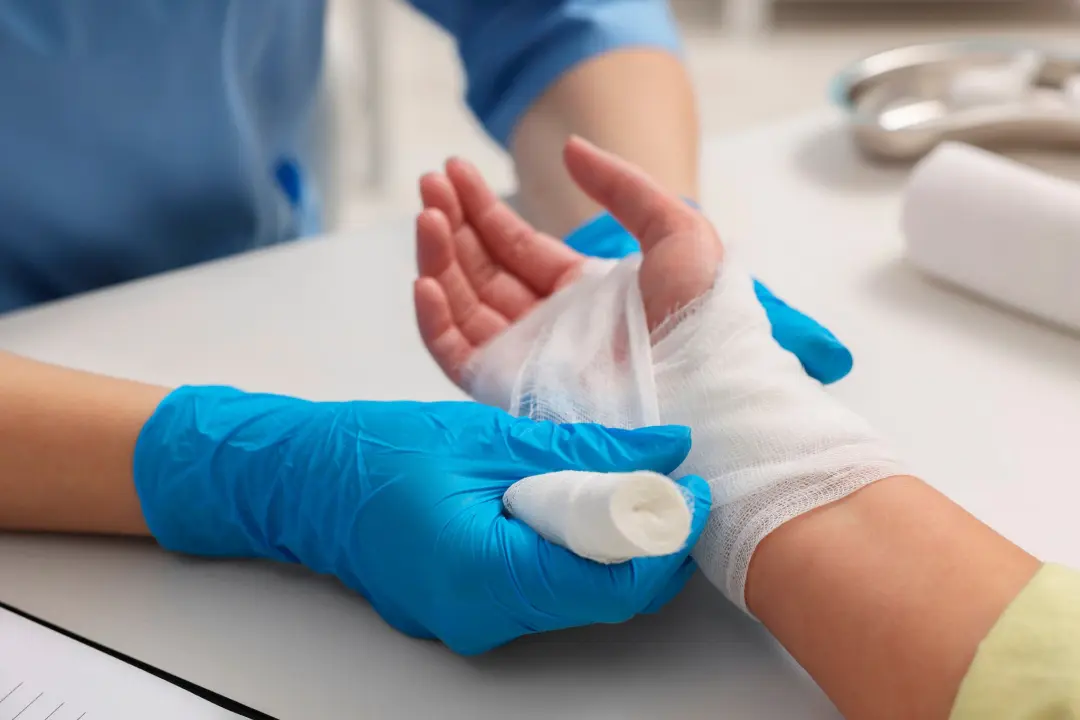
Wound care management is a specialized field of medicine focused on the assessment and treatment of complex, chronic, or slow-healing wounds. When conventional dressings and basic care measures are not sufficient, trained providers may implement advanced clinical techniques; these help support healing and reduce the risk of complications. Effective wound care often requires a personalized approach based on the wound’s cause, severity, and the patient’s overall health. Here are several techniques used to help manage wounds:
Sharp Surgical Debridement
Sharp surgical debridement removes non-viable tissue from a wound using sterile instruments such as scalpels or scissors. Dead or damaged tissue in the wound bed slows the healing process, and this technique addresses that directly. A trained provider performs the procedure in a clinical or surgical setting.
The goal is to clear away tissue that no longer supports healing and expose the healthier tissue beneath. Providers work with precision; they target specific areas while leaving surrounding tissue intact. This method is a well-established, direct approach, particularly for wounds that have not responded to less invasive options.
Split Thickness Skin Grafts
A split thickness skin graft transfers a thin layer of skin from one area of the body, called the donor site, to cover a wound elsewhere. The harvested layer includes the outer skin and a portion of the layer beneath it. Surgeons use this technique when a wound lacks sufficient tissue to close on its own. They place the graft over the wound bed, and they secure it in position. Over time, the graft integrates with the surrounding tissue. This is a practical wound care option for covering larger surface areas where natural closure is not feasible.
Bioengineered Skin Substitutes
Bioengineered skin substitutes are laboratory-developed materials, and they function as a temporary or permanent wound covering. These products mimic key properties of natural skin and provide a structured environment that supports the wound bed. Providers may use these substitutes when donor tissue is limited or when a wound requires a scaffold to support tissue development. Distinguishing factors of these products include:
- Some are derived from biological materials; others use synthetic components
- Selection depends on wound type, size, and clinical assessment
- Products may vary in whether they serve a temporary or long-term covering function
- This field continues to advance as materials science develops new options
Hyperbaric Oxygen Therapy
Hyperbaric oxygen therapy (HBOT) delivers 100% oxygen to a patient inside a pressurized chamber. Under these conditions, the body absorbs more oxygen than it would at normal atmospheric pressure. In wound care, HBOT functions as a supportive measure, so it is typically used alongside other treatments. Providers administer the therapy in scheduled sessions over a defined period. They base their recommendation on the specific characteristics of the wound and the patient’s overall health profile. HBOT may help wounds that have a compromised blood supply or those that have been slow to respond to other interventions.
Find a Wound Care Specialist
Sharp surgical debridement, split thickness skin grafts, bioengineered skin substitutes, and HBOT each serve a distinct purpose in wound care management. These techniques address different challenges, and providers select them based on the individual needs of each patient. Understanding your options is a fundamental step toward making informed decisions about your care. If you or someone you know is managing a complex wound, contact a qualified wound care specialist to discuss possible treatments.
