

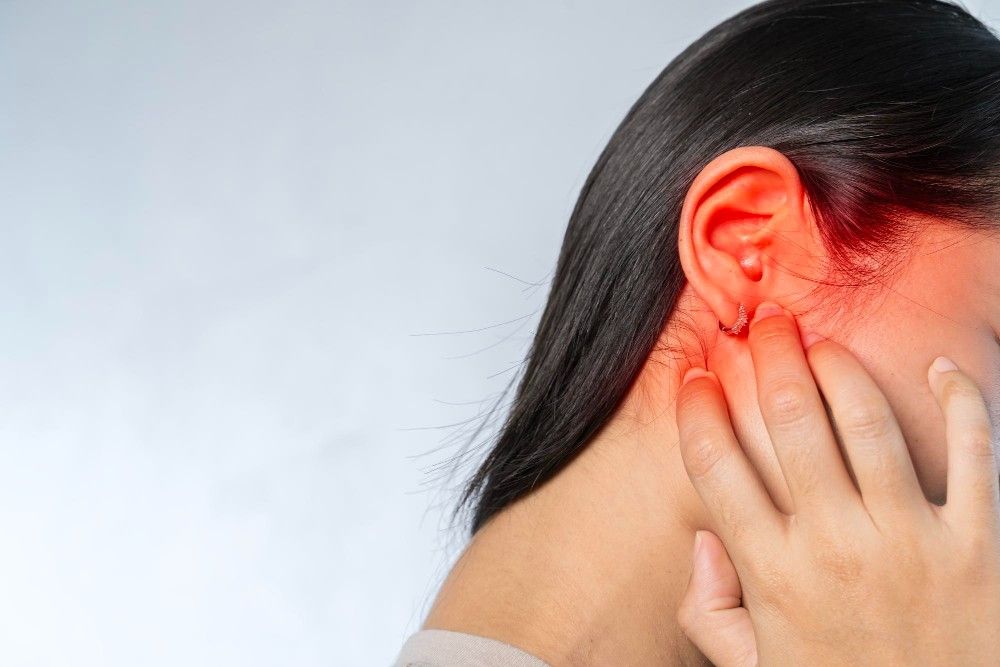
Eardrum perforation occurs when a hole or tear develops in the tympanic membrane, which is the thin layer of tissue separating the outer ear canal from the middle ear. This membrane plays a fundamental role in hearing. It vibrates in response to sound waves, and it transmits those vibrations to the middle ear. The tiny middle-ear bones then transmit the vibrations to the inner ear, where they are converted into nerve signals that the brain interprets as sound. Here’s more information about this condition and how to treat it:
Recognizing the Condition
The tympanic membrane also acts as a protective barrier for the middle ear. When a perforation occurs, that barrier breaks down. Perforations vary in size; some are small pinholes, while others affect a larger portion of the membrane. Eardrum perforation may present with several recognizable signs, including:
- Sudden ear pain that goes away quickly
- Fluid or discharge from the ear canal
- Reduced hearing in the affected ear
- Ringing or buzzing sounds, known as tinnitus
- A sensation of dizziness or spinning
These signs can overlap with other ear-related conditions, so a professional evaluation is the standard approach for accurate identification. Because no two cases are alike, a healthcare provider uses specific diagnostic tools to assess what is occurring inside the ear.
Understanding the Common Causes
Several factors are commonly linked to eardrum perforation, and each one involves a different type of stress on the tympanic membrane. Middle ear infections are a frequent cause. When fluid builds up behind the eardrum due to infection, rising pressure sometimes results in a membrane tear.
Physical trauma is another pathway to perforation; a blow to the head, a fall, or a sports-related impact may damage the membrane directly. Pressure changes from flying or scuba diving, referred to as barotrauma, are also associated with eardrum injury. Rapid shifts in air or water pressure can place significant stress on the membrane. Acoustic trauma occurs when a sudden, extremely loud sound, such as an explosion or gunshot, generates enough force to rupture the eardrum. Inserting foreign objects into the ear canal, including cotton swabs or hairpins, is another documented cause. The eardrum sits close enough to the ear canal opening that objects can reach it without requiring significant depth.
Exploring Treatment Approaches
Some perforations close on their own over time, so providers often recommend a period of observation. They advise keeping the ear dry and avoiding activities that introduce pressure or moisture to the ear during this period. If infection plays a role, a qualified professional may prescribe medication to address it. The specific medication and duration are determined by the provider after a thorough examination. For perforations that do not resolve independently, an ear specialist may place a thin patch over the membrane; this provides a framework that supports natural closure. Surgical repair, known as tympanoplasty, is an option for perforations that do not respond to other approaches. During this procedure, a specialist uses a small tissue graft to repair the membrane.
Find Treatment for Eardrum Perforation
Eardrum perforation involves a tear or hole in the tympanic membrane, and it can result from infection, trauma, loud noises, and foreign object insertion. Treatment options span from watchful observation to surgical intervention. If you notice changes in your hearing, ear discharge, or persistent ear pain, contact an ear specialist for a thorough evaluation and personalized guidance.
