

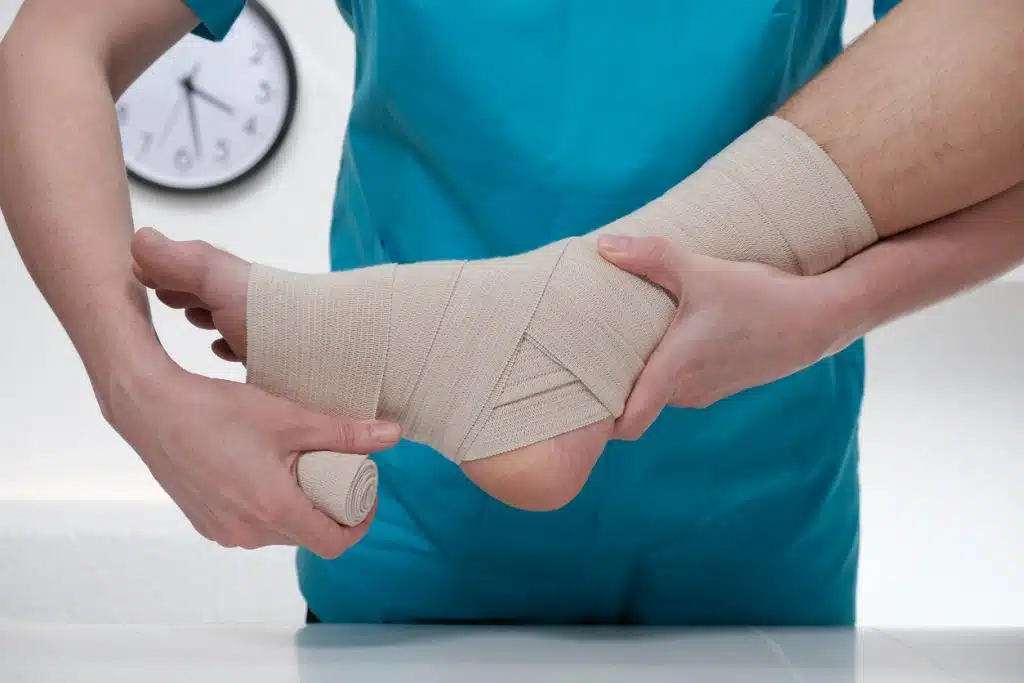
Foot surgery leaves an incision that needs steady attention during healing, so a wound care specialist treats incisions that heal slowly or show signs of trouble. Your feet carry your full body weight, and they spend much of the day inside shoes. Here is more information on caring for your wound at home:
Preventing Infection
Bacteria enter a wound when the skin barrier stays open. Wash your hands with soap and water before touching the area. Keep pets away from your dressing, and don’t let others handle it. Use only the cleaning products your surgeon approves.
Some redness is normal at first, but it should fade over several days. Take your antibiotics exactly as prescribed by your wound care specialist. Finish the full course even if the wound looks better. Smoking slows blood flow to the feet, so stop or cut back during recovery. Check your incision at the same time each day. Call your doctor if you notice any of these changes:
- Red areas spreading beyond the incision
- Swollen areas or warmth that increases after day three
- Yellow, green, or cloudy drainage
- Foul smells from the wound
- High fever and symptoms
Changing Wound Dressings
Your surgeon will give you specific dressing instructions. Some patients change dressings daily, and others leave the first dressing in place for a week. Follow your own plan, since timing depends on the type of surgery. Keep the written instructions next to your supplies.
Before you start, gather clean gauze, tape, and any prescribed ointment. Remove the old dressing slowly, and pull the tape toward the incision. Look at the wound for changes in color, size, or drainage. If the gauze sticks, wet it with sterile saline to loosen it.
Once the old dressing is removed, clean the area gently with sterile saline to make sure the wound stays free from infection. Avoid touching the incision directly to reduce the risk of contamination. If you notice increased redness, swelling, or unusual discharge, contact your healthcare provider promptly to discuss any concerns.
Protecting Incisions
Moisture softens the skin around the incision, and pressure slows healing. Keep the dressing dry at all times. Unless your doctor approves it, avoid baths, pools, and hot tubs. Don’t pick at scabs, even when they itch. Wear loose pants, and keep tight socks off the foot. Try these steps during showers and rest:
- Cover your foot with a cast bag or a plastic bag sealed with tape
- Sit on a shower chair to reduce slipping
- Prop your foot on pillows above heart level
- Wear the surgical shoe or boot from your surgeon
Adjusting Activities
Walking too soon strains the incision before the tissue closes. Most patients follow weight-bearing limits for several weeks. Use crutches, a knee scooter, or a walker, and keep weight off the foot as directed. Avoid long periods of standing, even with support.
Swelling typically worsens in the evening, so plan short rest breaks throughout the day. Ask your surgeon when you may drive, work, or exercise again. Each procedure has its own recovery timeline. Return to regular shoes only after your surgeon clears you.
Visit a Wound Care Specialist
Some incisions heal more slowly than expected. A wound care specialist evaluates wounds that stay open past the usual timeline. The specialist checks blood flow and removes damaged tissue, and they may recommend advanced dressings. If your incision opens, drains, or stops improving, schedule a visit soon, and bring your surgical records and list your current medications.
