

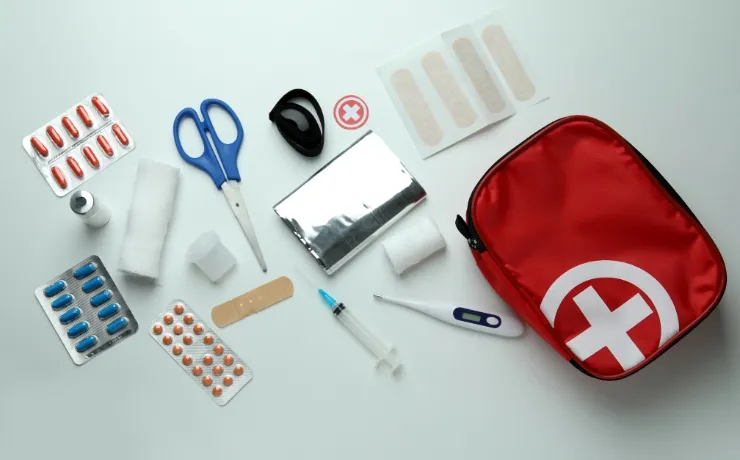
Wound care is the process of cleaning, covering, and monitoring a break in the skin. Minor wounds typically heal with basic supplies, and a stocked kit saves you a search during an injury. When you keep the right items in one place, you respond faster and with less stress. This guide covers four supplies for your home first aid kit.
Sterile Gauze Pads
Since gauze pads come sealed in individual packets, they stay free of germs until you open them. They absorb blood and fluid from a wound. Some kits include 2×2-inch pads for small cuts, and 4×4-inch pads cover larger scrapes. Non-stick pads have a coating that keeps them from sticking to healing skin.
Place a pad directly over the wound, and press firmly with your palm. If blood soaks through, add a second pad on top of the first one. Removing the first pad may disturb a forming clot. Hold steady pressure for at least 10 minutes.
Check the expiration date on each packet every few months. If a wrapper looks torn or damp, throw the pad away. Gauze can be helpful for wound care, so keep pads of mixed sizes in your kit.
Medical Tape
Medical tape holds gauze in place while the wound begins to heal. Adhesive bandages work for small cuts, but tape secures larger dressings. Different tapes suit different skin types and body areas. Keep at least two of these types in your kit:
- Paper tape: gentle on fragile or sensitive skin
- Cloth tape: firm hold for knees, elbows, and other joints
- Waterproof tape: stays on during handwashing or bathing
- Plastic tape: lets you see the dressing underneath
Tear strips about two inches longer than the gauze pad, and press the ends onto dry skin. Avoid wrapping tape all the way around a finger or limb because it may cut off circulation. Change the tape and dressing once a day.
Antiseptic Wipes
Antiseptic wipes kill germs on the skin, and they fit easily in a small kit. Typical types contain benzalkonium chloride, alcohol, or povidone-iodine. Since alcohol stings on open skin, many people choose benzalkonium chloride wipes for cuts. Povidone-iodine may stain skin and fabric. Before you use a wipe, rinse the wound under cool running water for several minutes.
Blunt-tipped Scissors
Blunt-tipped scissors have a rounded end on the lower blade. The rounded tip slides under bandages, and it lowers the risk of nicking skin. Many kits include a small pair, although some people add a larger pair for thick dressings. Look for these features when you shop:
- Stainless steel blades that resist rust
- Angled design for cutting close to the skin
- Comfortable plastic handles
Store the scissors in their own pouch inside the kit. After you use them, wipe the blades with an alcohol pad. Do not borrow them for crafts or packages, or the blades may dull.
Schedule Wound Care Near You
Home supplies handle many minor cuts and scrapes. Seek medical care if a wound is deep, gaping, or still bleeding after applying pressure. Redness, warmth, swelling, and pus signal infection, and these signs also need a provider’s attention. Find a foot and ankle clinic near you to schedule an appointment.
