

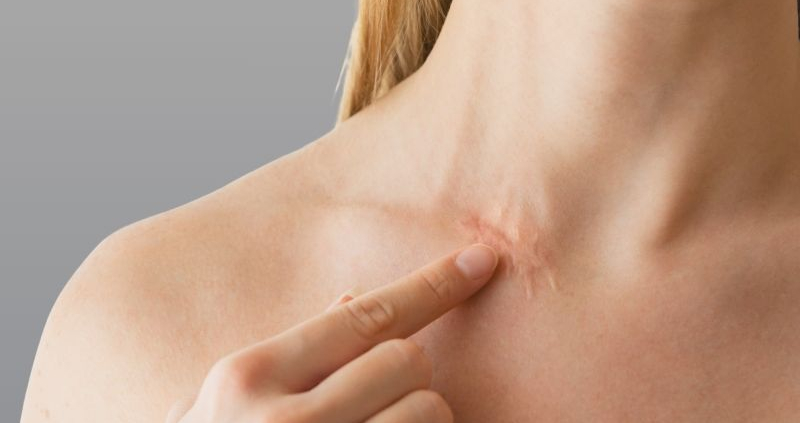
Scars form as the skin repairs itself after events like surgery and acne breakouts. Texture, depth, and color vary from one scar to the next; this is because the healing process and the extent of the original damage differ in every case. Since no two scars match, practitioners may use several techniques to address distinct types. The right choice typically depends on careful assessment by a dermatologist. Here are several techniques for scar correction and management:
Fractional Laser Resurfacing
Fractional laser resurfacing helps target and treat skin damage. Some hybrid options combine two wavelengths within a single device. One wavelength targets the surface, while the other reaches deeper layers to encourage remodeling; this pairing lets practitioners address two concerns at once. Because the device delivers energy in narrow columns rather than across the whole area, untreated skin remains between each point. This supports a more controlled treatment and recovery process.
Providers may recommend this treatment for scars that involve both discoloration and textural irregularities. Scar correction sometimes requires a series of sessions scheduled several weeks apart, and treatment settings are customized to suit your skin type and blemish characteristics. Because the skin heals and improves gradually, it typically takes one full week to recover.
Microneedling With PRP
Microneedling uses fine needles to create controlled microchannels across the skin, and these small punctures stimulate the body’s natural healing response. As the skin repairs itself, it begins to produce new collagen and elastin, which support a smoother and more even texture. When combined with platelet-rich plasma (PRP), the procedure involves drawing a small sample of your blood and processing it to isolate the platelet-rich component. The provider then applies it to the treated area to enhance the skin’s regenerative response. This combined approach pairs mechanical stimulation with biologically derived growth factors from your own body. Providers may recommend a series of sessions scheduled several weeks apart; this helps reduce acne scars.
Radiofrequency Microneedling
Radiofrequency microneedling builds on standard microneedling by adding heat through the needle tips. The needles reach a set depth, deliver radiofrequency energy, and treat the deeper layers while leaving the surface comparatively undisturbed. This action makes the technique a suitable choice for acne and surgical scars. The treatment is safe for all skin types, and it requires little downtime.
Several factors may shape how a provider plans this treatment, including:
- Depth settings, adjusted to match the scar type
- Energy levels, calibrated to your skin
- Session count, usually spread across several months
- Spacing between visits to allow recovery
Learn More About Scar Correction
Fractional lasers, microneedling with PRP, and radiofrequency microneedling each target scarring in different ways. Some providers also offer chemical peels; these work by exfoliating the outer layers of the skin to improve texture and reduce the appearance of superficial scarring. The most appropriate option depends on your skin type and the characteristics of the scar being treated. A dermatologist can assess your skin, explain the benefits and limitations of each option, and outline a personalized treatment plan tailored to your case. To determine the right approach, schedule a consultation with a qualified practitioner who offers scar correction treatments.
