

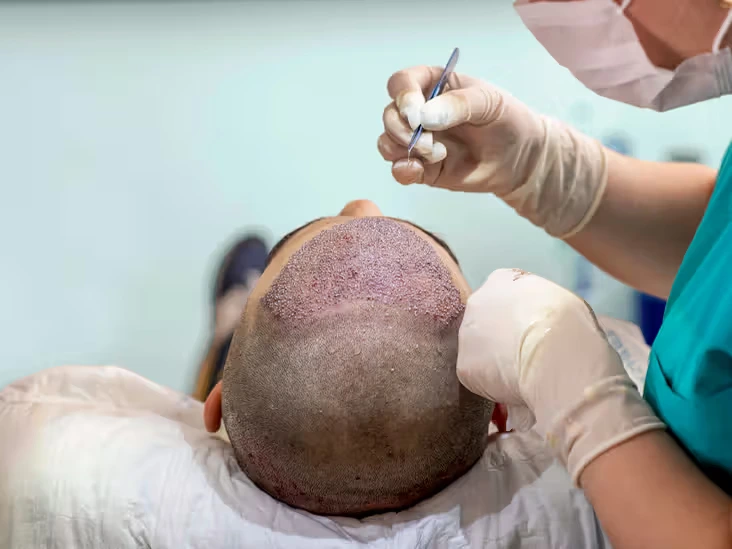
Follicular unit extraction (FUE) is a hair transplant method that moves individual hair follicles from one part of the scalp to another. A surgeon removes small groups of hairs from a donor area, and they place them in thinning or balding areas. Unlike the strip method, FUE does not involve cutting out a long section of scalp tissue. Here is more information about the FUE hair transplant procedure:
How Does the Procedure Work?
Most FUE procedures take place in an outpatient clinic; session length depends on how many grafts you need. Before the session, your surgeon reviews your hair loss pattern, examines your donor area, and marks the planned hairline. The process usually follows these steps:
- Preparation: The donor area, usually the back or sides of the head, is trimmed short. A local anesthetic numbs both the donor and recipient areas.
- Extraction: The surgeon or technician uses a small punch tool to remove follicular units one by one.
- Graft storage: The grafts are sorted and kept in a holding solution until placement.
- Site creation: The surgeon makes tiny incisions in the recipient area. The angle and direction of each incision affect how the new hair grows.
- Implantation: Each graft is placed into a recipient site by hand or with an implanter tool.
Patients stay awake throughout the procedure. Afterward, small round marks remain in the donor area, but these typically heal within a few weeks. Tiny scabs form around the grafts. Transplanted hairs may fall out within the first weeks. This is normal, and new growth should begin a few months later. Final results are typically assessed at 10 to 12 months.
What Are Its Benefits?
Because grafts are removed individually, FUE leaves no linear scar across the back of the head. The scattered marks are usually less noticeable with short hairstyles, but they are not invisible. Other features of FUE include:
- No stitches: Donor sites close on their own.
- Shorter downtime for many patients: Many people return to desk work within a few days, although recovery varies.
- Flexible donor sources: Surgeons sometimes take grafts from the beard or body when scalp donor hair is limited.
- Hairline detail: Surgeons often place single-hair grafts along the front edge to mimic a natural hairline.
Who Is a Candidate?
A good candidate generally has enough healthy donor hair at the back and sides of the scalp. Patients often have male- or female-pattern hair loss, which can cause gradual thinning over time. Surgeons also look for stable hair loss, so many recommend waiting until your mid-twenties or later. This can make the long-term pattern easier to predict. Some conditions make a FUE hair transplant less suitable. These include widespread thinning in the donor area, active scalp disease, and untreated medical causes of hair loss.
Get a FUE Hair Transplant
FUE moves individual follicles to thinning areas without leaving a linear scar. Outcomes vary from person to person. A consultation is a reliable way to learn whether this method fits your situation. During that visit, a surgeon will examine your scalp and outline the recovery timeline. Schedule a consultation at a hair restoration clinic today to discuss your options.
