

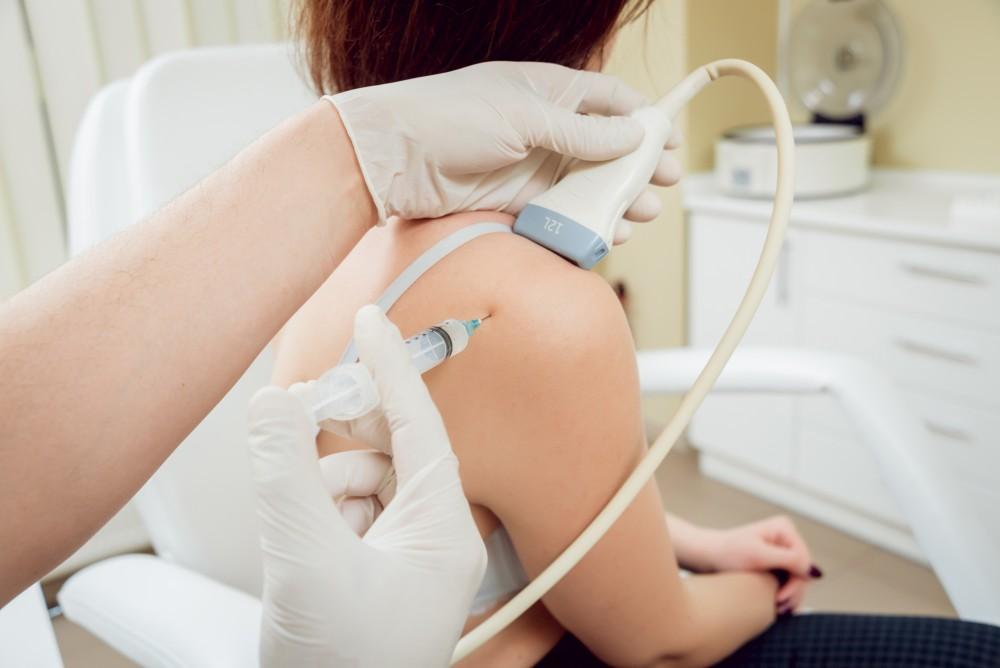
Platelet-rich plasma (PRP) injections use a concentrated form of a patient’s own blood platelets to stimulate tissue repair. PRP therapy delivers growth factors directly to an injured area; this targeted delivery can speed up healing in tendons, ligaments, muscles, and joints. Because the treatment supports the body’s natural repair process, it may reduce recovery time compared to standard treatment alone. Here is more information on what PRP injections are, who benefits from them, and how they contribute to faster healing:
What Are PRP Injections?
PRP injections involve drawing a small sample of a patient’s blood, which is then processed in a centrifuge to separate platelets from other blood components. This creates a concentrated platelet solution. The concentration is higher than what naturally circulates in the bloodstream, and the resulting solution is injected directly into the site of injury or degeneration.
Platelets contain growth factors. These growth factors play a central role in the body’s healing response, and when concentrated and delivered to damaged tissue, they signal cells to repair and regenerate. Because the injection uses a patient’s own blood, the risk of allergic reaction or rejection stays low. PRP therapy offers an alternative when conventional treatments fail to provide relief.
Who Do They Help?
PRP injections benefit a range of patients, from athletes recovering from sports injuries to older adults managing joint degeneration. Tendonitis, rotator cuff tears, and tennis elbow may respond well to this treatment, and patients with chronic knee or hip pain from osteoarthritis potentially see significant improvement. Since the therapy uses the patient’s own blood, the risk of adverse reactions remains low, which makes it a viable option for a broad patient population. While outcomes vary, PRP therapy offers a valuable option for patients whose conditions have not responded adequately to conservative treatment.
How Is Healing Accelerated?
Growth factors released by concentrated platelets trigger several biological processes, and these processes work in coordination to accelerate repair. They attract repair cells to the injury site. Collagen production increases while new blood vessel formation is promoted at the same time, which creates an environment where damaged tissue can rebuild more efficiently than through natural healing alone.
Traditional healing relies on the body to gradually clear damaged cells and replace them with new tissue. This process can take weeks or months; the timeline varies by injury severity and location. PRP injections jump-start this process by flooding the affected area with the signaling molecules the body already uses for repair, though in higher concentrations.
What Are the Recovery Benefits?
PRP therapy offers several recovery benefits for patients managing pain and injury. These include:
- Reduced pain and improved joint function: Patients may report less discomfort and improved mobility after treatment.
- Minimal downtime: Because PRP therapy uses minimally invasive injections, patients resume normal activity quickly.
- Long-term joint support: Benefits may include delayed progression of joint degeneration and reduced reliance on pain medication.
Facilitate Your Recovery
PRP injections offer pain medicine patients an effective option to accelerate healing without surgery. By concentrating the body’s own growth factors and delivering them directly to damaged tissue, this treatment supports faster repair; it may also improve function for common injuries and degenerative conditions. If you are looking to learn more about PRP therapy, contact a pain management specialist. A personalized evaluation will clarify whether this treatment aligns with individual recovery goals and help set realistic expectations for results.
