

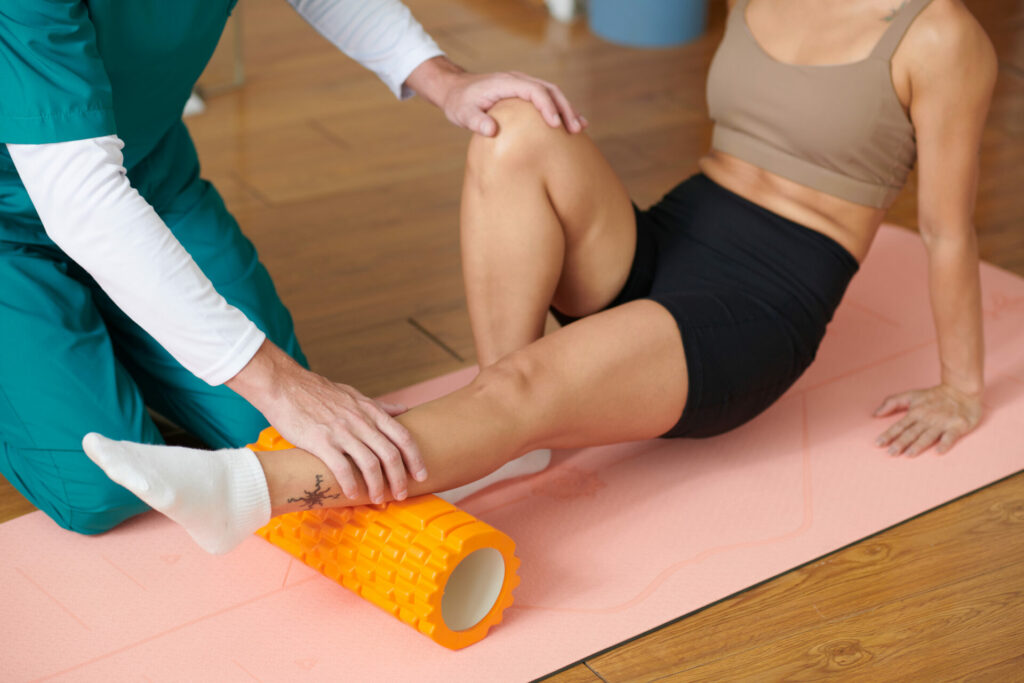
When the sciatic nerve becomes irritated, pain may travel from your lower back down through your hip and leg. The discomfort typically affects one side of the body. Some people feel a dull ache, and others notice burning, tingling, or sharp jolts. These home sciatica pain relief methods may ease mild flare-ups between medical visits:
Targeted Stretches
Gentle stretches may loosen the muscles around the sciatic nerve, and they take only a few minutes. Skip any stretch that sends pain farther down your leg. To get sciatica pain relief, hold each stretch for 20 to 30 seconds and repeat it two or three times. Try these options on a firm, flat surface:
- Knee-to-chest stretch: Lie on your back and gently pull one knee toward your chest.
- Seated piriformis stretch: Sit tall, cross one ankle over the opposite knee, and lean forward slightly.
- Figure-four stretch: Lie on your back, cross one ankle over the other knee, and pull the lower thigh toward you.
- Targeted hamstring stretch: Rest one heel on a low step and hinge forward at the hips with a straight back.
Hot and Cold Therapy
Cold packs are a typical first step for a new flare-up. Since cold constricts blood vessels, it may reduce swelling around the nerve. Wrap the pack in a thin towel, and hold it on your lower back for 15 to 20 minutes; repeat this every two to three hours during the first 48 hours.
Heat works differently; it relaxes tight muscles and increases blood flow. Many people switch to heat after the first two or three days. If you use a heating pad, keep it on a low or medium setting. A warm, damp towel offers another option for moist heat.
Some people alternate heat and cold until they find the pattern that helps. Never sleep on a heating pad, and check your skin every few minutes. To avoid injury, stop at any sign of redness, blistering, or numbness.
Over-the-counter Medications
Nonsteroidal anti-inflammatory drugs (NSAIDs) target both pain and inflammation. Ibuprofen and naproxen are typical choices, and most pharmacies stock both. Follow the dosing directions on the label. Take these medicines with food because they may irritate your stomach lining.
If NSAIDs upset your stomach, acetaminophen offers another option for pain. It treats pain but does not reduce inflammation. People with kidney disease, ulcers, or liver problems may face extra risks, so talk with a provider first. Check with a pharmacist if you take blood thinners or other daily medicines.
Topical Medicines
Topical products work on the skin where you apply them. Rub a thin layer over the sore area, and wash your hands afterward. These products may cause fewer stomach side effects than pills. Typical options include:
- Lidocaine creams or patches: Numbing agents that dull nerve signals in the skin
- Menthol or camphor rubs: Cooling or warming products that distract from deeper aches
- Capsaicin cream: A pepper-based product that may cause brief burning at first
Get Professional Sciatica Pain Relief
Seek medical care if your pain lasts more than a week or keeps getting worse. Leg weakness, numbness in the groin, or loss of bladder control requires emergency care. A pain management clinic can address these issues, and a provider may examine your back and discuss treatment options.
