

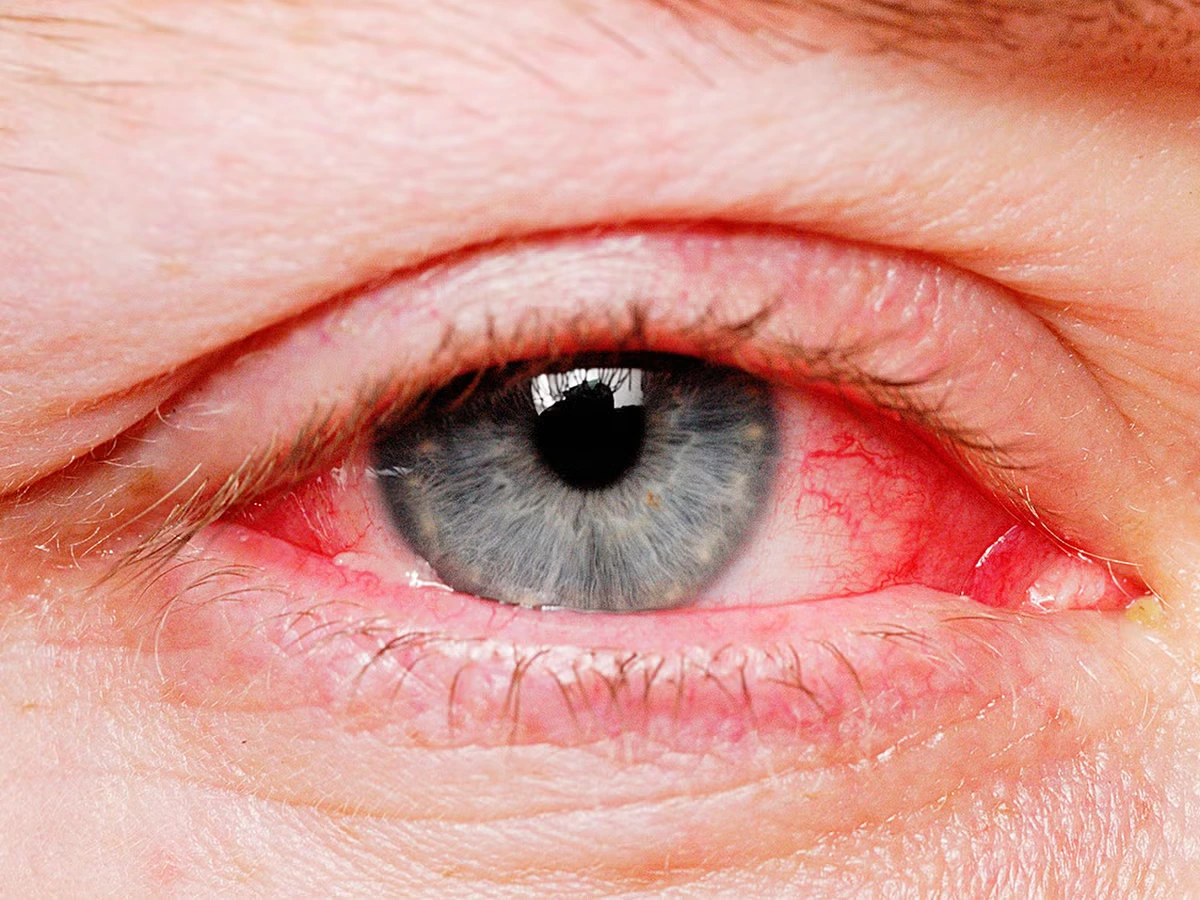
Red eyes are a common symptom of allergic reactions, often occurring when the eyes are exposed to allergens such as pollen, dust, pet dander, and mold. These allergens can trigger inflammation in the conjunctiva, causing redness and excessive tearing. Here is more information on the link between allergies and red eyes:
How Do Allergies Cause Redness?
The conjunctiva is a thin and clear membrane that covers the white part of the eye and lines the inner eyelids. When an allergen lands on this membrane, the immune system treats it as a threat, and it releases a chemical called histamine. Histamine widens small blood vessels in the conjunctiva, causing red eyes. The response is a defense mechanism, though it often produces discomfort instead of protection.
Eye care professionals call this reaction allergic conjunctivitis. It differs from bacterial or viral conjunctivitis, and it does not spread from person to person. The reaction usually affects both eyes at once, while infections often start in one eye.
Which Allergens Trigger Eye Irritation?
Allergens fall into two broad groups: seasonal and perennial. Seasonal allergens appear at certain times of the year, while perennial allergens stay present year-round. Tracking when your red eyes appear can help narrow down the likely cause. Here are some common triggers:
- Pollen: Trees release pollen in spring, grasses in late spring and summer, and weeds such as ragweed in late summer and fall.
- Dust mites: These microscopic organisms live in bedding, carpets, and upholstered furniture.
- Pet dander: Tiny skin flakes from cats, dogs, and other animals float in the air and settle on surfaces.
- Mold spores: Mold grows in damp areas such as basements and bathrooms, and its spores travel through the air.
- Irritants: Smoke, perfume, and air pollution are not true allergens, but they can worsen existing irritation.
Which Symptoms Indicate Eye Allergies?
Itching is a common sign of allergic eye irritation, and it often appears alongside red eyes. Other symptoms include watery discharge, a burning sensation, swollen eyelids, and light sensitivity. When these signs occur with sneezing or a runny nose, an allergic cause becomes more probable.
Some symptoms point to a different problem. Eye pain, blurred vision, or thick yellow or green discharge are not characteristic of allergies, so they require prompt professional evaluation. Rubbing the eyes worsens redness and transfers more allergens from your hands to the eye surface.
How Can It Be Managed?
Managing allergic red eyes usually combines professional care with home changes. A provider confirms the cause before recommending a plan, helping you avoid products that don’t match your condition.
Professional Treatment Options
An eye care provider examines the eye surface with a magnifying instrument called a slit lamp. Based on the findings, the provider often recommends antihistamine eye drops, mast cell stabilizer drops, or lubricating artificial tears. Some patients need prescription drops for a short period, while others can manage symptoms with over-the-counter options.
Prevention Strategies at Home
Reducing exposure is a fundamental part of long-term management. Keep windows closed on high-pollen days, and run an indoor air purifier with a HEPA filter. Wash bedding weekly in hot water to remove dust mites and dander that collect in fabric. Wear wraparound sunglasses outdoors and wash your hands after touching pets.
Address Your Red Eyes Today
Allergies cause red eyes when the immune system reacts to pollen, dust mites, pet dander, mold, or irritants. Itching and swelling are typical signs, while pain or vision changes often point to other causes. Management combines professional treatment with simple at-home steps to reduce exposure. To address your red eyes, contact a qualified ophthalmologist near you to schedule your consultation today.
