

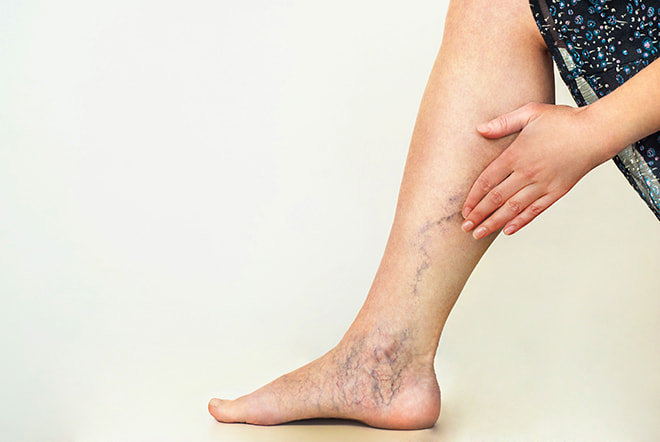
Varicose veins appear when valves in your veins weaken. Blood pools in the affected area, and the veins begin to swell, twist, or bulge. Since you can take steps at home to ease discomfort, several medical treatments exist when symptoms persist or worsen.
Adjust Your Daily Habits
Movement keeps blood flowing, and regular walking supports healthy circulation in your legs. Daily habits influence how your varicose veins feel. Sitting or standing for long periods strains your veins, so shift positions often if work keeps you still. Elevating your legs above heart level reduces pressure, and this usually eases swelling by evening. Regular stretching loosens tight calf muscles, and gentle ankle rotations push blood toward your heart. Staying hydrated supports healthy circulation, so drink water throughout the day. Tight clothing can restrict flow, so pick loose, comfortable garments. Resting with your legs on a pillow at night helps blood return to your heart while you sleep.
Choose Compression Support Wisely
Compression stockings apply gentle pressure to your legs. They encourage blood to move upward, and many people wear them during work hours for relief. You can find stockings in different strengths, so a provider will help you select the right level. Light support suits mild symptoms, while firmer compression addresses more noticeable swelling,. Your provider may suggest knee-high or thigh-high styles. Put stockings on in the morning before swelling builds, and remove them at night to rest your skin. Proper fit matters, so a provider can measure your legs to make sure the stockings work well.
You should replace worn stockings regularly, since stretched fabric loses its supportive pressure over time. Wash them by hand or on a gentle cycle, and this care helps the material keep its shape. If pulling stockings on is difficult, you can use a donning aid, and these tools make the task easier for many people. Smooth out any wrinkles once they are on, because folds can press unevenly into your skin. Compression suits travel too, so you should wear stockings on long flights or drives when your legs stay still for hours. Pair them with movement and elevation.
Explore Medical Treatment Options
Several minimally invasive treatments close diseased veins. Laser ablation, also called EVLT, uses laser energy to heat and collapse the affected vein. Your body then reroutes blood through healthy veins, and circulation continues without the troublesome vessel. Radiofrequency ablation works on similar principles, since it uses radio wave energy instead of light to heat and close the vein. Your provider guides a thin catheter into the vein, and controlled heat seals the vessel along its length. Both methods share several practical benefits worth knowing:
- Typical procedures take place in a clinic and require only local anesthesia.
- Individual recovery is generally fast, so you can often resume light activity the same day.
- Minimal scarring occurs, since these methods use small entry points rather than large incisions.
- Mild soreness or bruising may appear, and these effects usually fade within a few days.
- Light walking soon after treatment supports healthy circulation, so your provider will encourage gentle movement.
Schedule Varicose Veins Treatments
Professional guidance aids in the right plan for your veins. A provider can examine your symptoms while recommending a treatment suited to your situation. Contact a vein specialist today, and you can take the next step toward managing your varicose veins.
