

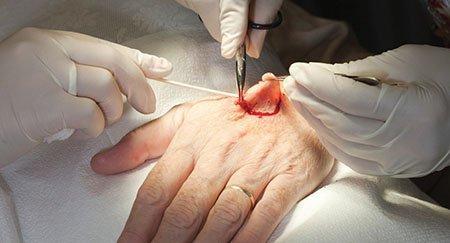
Skin cancer is the most commonly diagnosed cancer in the United States, and treating it effectively requires precision. Mohs surgery meets that standard by combining surgical removal with immediate pathological analysis, making it an effective, minimally invasive treatment. Here is more information on Mohs surgery, why it is conducted, the different techniques used, what the process involves, and what recovery is like:
What Is Mohs Surgery?
Mohs surgery is a specialized procedure in which a dermatologic surgeon removes cancerous skin tissue in thin, successive layers, facilitating precise treatment. Each layer is examined under a microscope before the next is removed. This method allows the surgeon to identify and eliminate cancer cells, and it preserves as much healthy surrounding tissue as possible.
Why Is It Conducted?
Mohs surgery is conducted to remove skin cancer with precision, particularly in certain clinical situations.
- It is recommended for treating basal cell and squamous cell carcinomas on cosmetically sensitive areas such as the face, ears, or hands.
- It is also indicated for cancers that have recurred after a previous treatment has failed.
- A surgeon may use it for tumors that have indistinct or poorly defined borders.
The objective is to remove all cancerous cells while preserving healthy tissue.
What Are the Different Techniques?
The standard technique is Mohs micrographic surgery, and in this approach, the surgeon removes a tissue layer, maps it, and processes it on-site for same-day microscopic review. This method examines the surgical margins with high precision, offering greater accuracy than traditional excision methods. The surgeon selects the appropriate technique based on the tumor type, its location, and their clinical judgment.
What Does the Process Involve?
The procedure takes place in the office, and the surgeon first numbs the target area. They remove the visible tumor along with a thin margin of surrounding tissue, then they step away to map and examine the sample microscopically. If cancer cells are detected at the margins, the surgeon removes an additional layer only from the affected area. This cycle continues until the margins are clear.
Each stage requires laboratory processing and review, so the procedure can take several hours. Patients typically remain in the clinic between stages. Once clear margins are confirmed, the resulting wound is either repaired on the same day or referred for reconstruction; the choice depends on its size and location.
What Is Recovery Like?
Recovery varies depending on the wound size, location, and method of closure. Smaller wounds closed with simple sutures may heal within a couple of weeks, allowing a quick return to daily activities. Wounds requiring skin grafts or flap reconstruction may take longer, and they sometimes involve additional postoperative visits.
Patients may experience mild discomfort, swelling, and bruising around the surgical site in the days following the procedure. Surgeons may advise avoiding strenuous activity during the initial healing period, and wound care helps minimize the risk of infection. Long-term, a small scar is expected at the surgical site, though the extent depends on wound size and individual healing.
Learn More From a Dermatologist
Mohs surgery offers a targeted, tissue-sparing approach to treating common skin cancers, and its cure rates surpass those of other surgical methods. Understanding the techniques involved, as well as what to expect before, during, and after the procedure, helps patients prepare. If you have questions about which technique applies to your diagnosis or what your recovery timeline may look like, speak with your dermatologic surgeon. Schedule a consultation today to get answers specific to your case.
