

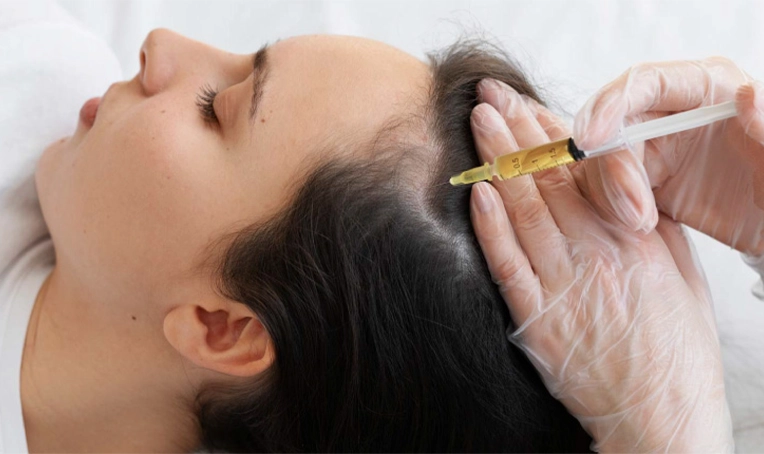
Platelet-rich plasma (PRP) therapy is a nonsurgical hair restoration treatment that uses concentrated platelets from a patient’s blood. During treatment, a blood sample undergoes processing to separate platelet-rich plasma, which providers inject into areas of thinning hair. Because platelets contain growth factors, PRP injections may stimulate hair follicles and support hair growth through a series of treatments. Here is more information about the role of PRP for Hair loss:
Understanding Platelet-Rich Plasma
PRP is derived from a patient’s blood, which contains red blood cells, white blood cells, plasma, and platelets. Platelets contain growth factors involved in cellular repair and tissue regeneration. When injected into the scalp, PRP may stimulate hair follicles and support hair growth in areas experiencing thinning.
A PRP for hair loss begins with a blood draw, similar to the process used during routine laboratory testing. Providers place the collected blood into a centrifuge, which separates and concentrates platelets within the plasma. Once prepared, the platelet-rich plasma is collected into a syringe for injection into areas of the scalp experiencing hair loss.
PRP hair restoration typically involves multiple treatment sessions spaced several weeks apart, depending on individual needs. Some patients receive three initial treatments approximately four to six weeks apart, followed by an evaluation of their progress. Because results vary, providers monitor changes in hair density and scalp health before recommending additional or maintenance treatments.
Stimulating Hair Follicles Naturally
Hair follicles naturally cycle through growth, resting, and shedding phases, with hormonal changes and genetics influencing these patterns. Hair thinning may occur when follicles gradually shrink or spend less time in the active growth phase. PRP therapy introduces concentrated platelets into the scalp, where growth factors may support follicle activity.
PRP injections may support existing hair follicles by influencing growth signals and blood vessel activity within the scalp. Although some patients experience improvements in hair thickness and density, treatment responses depend on individual hair loss patterns. Patients experiencing early-stage thinning may respond differently than those with more advanced hair loss. Because hair growth cycles vary, visible changes may take several months, and providers evaluate progress during follow-up appointments.
Combining PRP with Other Therapies
PRP hair restoration may be combined with other treatments to address different factors contributing to hair thinning. Because hair loss patterns vary, providers evaluate scalp health, hair density, and treatment goals before recommending additional therapies. Common treatment combinations include:
- Using topical minoxidil to support hair growth and maintain existing hair
- Taking prescribed finasteride to address hormone-related hair loss in appropriate patients
- Combining PRP with hair transplantation to potentially support follicle recovery after the procedure
- Following personalized treatment plans to address individual hair loss patterns and scalp conditions
Although combining treatments may offer additional benefits, results vary depending on the underlying cause and severity of hair loss.
Schedule PRP for Hair Loss Today
PRP hair restoration uses concentrated platelets containing growth factors that may stimulate hair follicles and support natural hair growth. Because the treatment uses a patient’s own blood, it offers a nonsurgical approach to addressing certain types of hair thinning. A qualified provider evaluates hair loss patterns, scalp health, and treatment goals to determine whether PRP is appropriate. Schedule a PRP consultation today to discuss your hair restoration options and develop a personalized treatment plan.
