

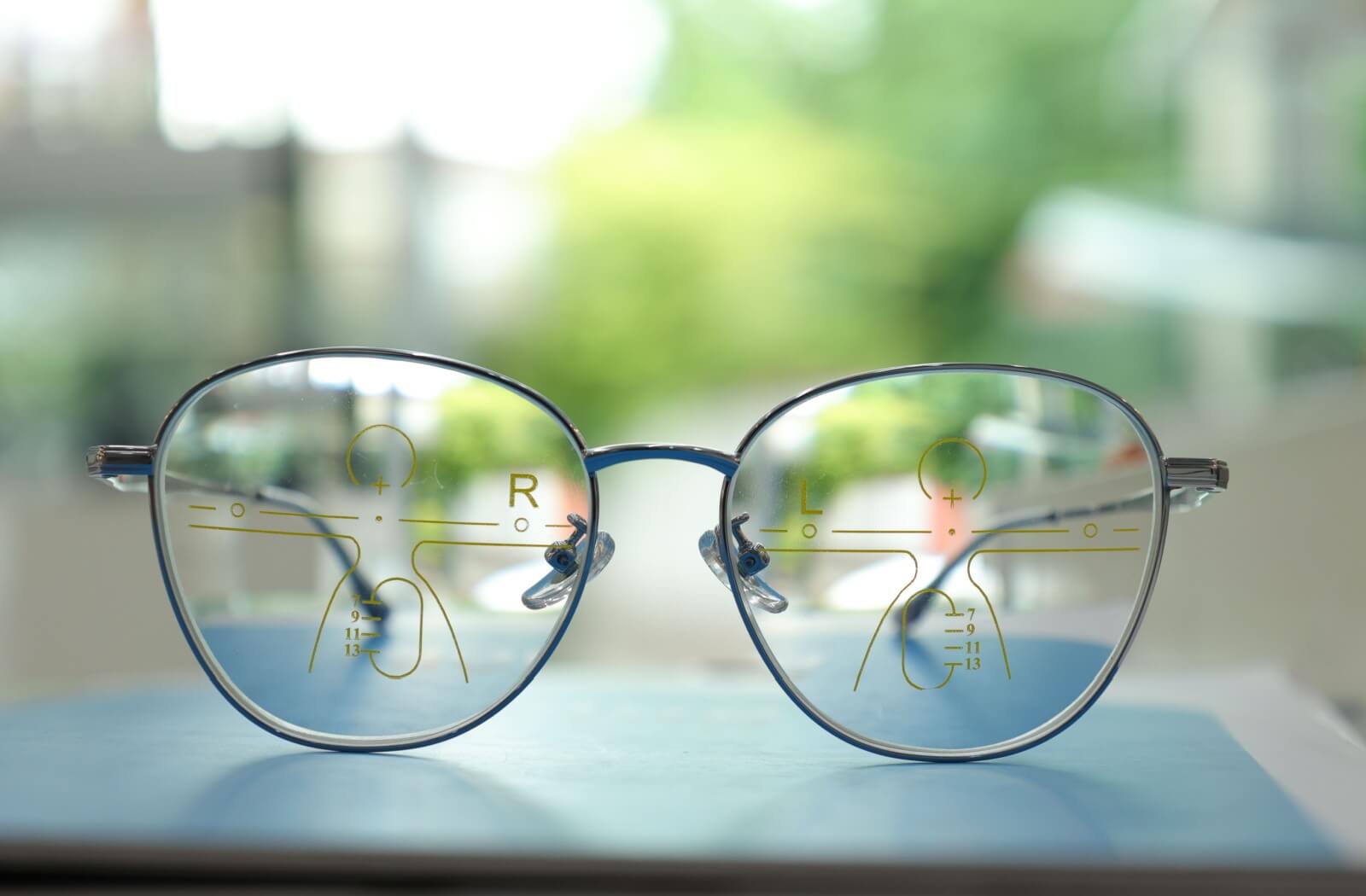
Progressive lenses use a multifocal design that provides a gradual transition in prescription power from distance to intermediate and near vision. Unlike traditional bifocals and trifocals, progressive lenses do not have visible segment lines. They are commonly used to correct presbyopia, an age-related change that makes it more difficult for the eyes to focus on nearby objects. An eye doctor can recommend and customize the appropriate lens prescription and design based on your individual visual needs. Here are some benefits of progressive eyeglass lenses for various activities:
Adjusting Long-Distance Focus
The upper portion of a progressive lens typically provides the prescription for distance vision. An optometrist determines the appropriate prescription during an eye examination and can use it to correct refractive errors such as myopia or hyperopia. The distance portion of the lens helps provide clear vision for activities such as reading road signs and viewing objects farther away while driving.
As you look downward through the lens, the prescription power gradually changes to support intermediate and near vision. Unlike bifocals, which have distinct prescription zones, progressive lenses provide a continuous transition between viewing distances; this avoids the abrupt image shift that occurs when looking between bifocal segments. Progressive lenses may produce some peripheral distortion or blur, particularly while the wearer is adapting to them.
This gradual change in lens power allows you to shift your gaze between objects at different distances without having to switch between separate pairs of glasses. At a sporting event, you are able to look toward the field and then shift your gaze toward someone nearby while using different areas of the same lens. This helps increase convenience for individuals who regularly shift their attention between near and far objects.
Facilitating Intermediate Vision
The middle section of a progressive lens, called the intermediate area, bridges the gap between distance and near vision. This zone focuses on objects at an intermediate distance, such as a computer screen positioned about an arm’s length away. By providing clear vision at this range, progressive lenses reduce the need to lean forward or adjust your posture to see the screen, which helps reduce digital eye strain and related physical discomfort.
Mitigating Eye Strain
Prolonged near work often contributes to visual fatigue, and extended periods of reading or detailed work may lead to symptoms such as eye strain or headaches. The lower section of progressive eyeglass lenses provides the strongest near-vision prescription and is designed for close-up tasks. For people with presbyopia, this added lens power provides the focusing support that the eye’s natural lens no longer provides as effectively.
The added lens power in the near-vision area provides optical support for close-up tasks. When you read a hardcover novel for several hours, you typically look through this lower section of the lens. For people with uncorrected presbyopia, prolonged near work is associated with symptoms such as eye strain and headaches. During an eye examination, your optometrist evaluates your near-vision needs and determines the appropriate lens design and positioning. This individualized approach places the near-vision area where it aligns with your typical viewing habits; proper lens fitting supports a comfortable head and neck position during close-up tasks.
Shop for Progressive Eyeglass Lenses
Progressive lenses use continuous focal gradients to support near, intermediate, and distance viewing during daily activities and detailed tasks. With personalized fitting and guidance from your eye doctor, adjusting to progressive lenses becomes a more comfortable process. Addressing your individual visual needs starts with scheduling a comprehensive eye exam; your eye doctor will evaluate your vision and recommend an approach suited to your daily activities. Book a personalized evaluation to determine your specific magnification needs before buying progressive eyeglass lenses.
