

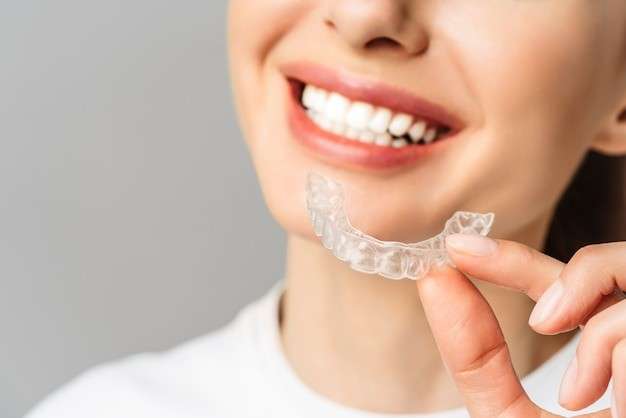
Modern clear braces use translucent ceramic materials. These brackets are less noticeable against natural teeth; they do not stain. Because advances in materials and digital technology have changed bracket design, current clear-brace systems include customized ceramic brackets, self-ligating designs, and sensor-based technologies.
Advancing Clear Braces Materials
Monocrystalline and polycrystalline alumina improve bracket strength and stain resistance; customized 3D-printed ceramic brackets match the color and shape of individual teeth. Because digital fabrication allows brackets to be customized to individual tooth anatomy, manufacturers produce different shapes, sizes, and positions, and the brackets can be customized for individual teeth. Ceramic brackets form the foundation of clear braces. Because treatment duration depends on the individualized plan, a permanent or removable retainer follows active treatment, and it holds teeth in their new position. Clear braces use clear wires. Treatment averages about two years; individualized plans vary.
Reducing Friction in Brackets
Self-ligating brackets use built-in clips. Because the clips secure the archwire without elastic ties, they reduce friction during tooth movement; newer designs improve wire retention, strength, and resistance to damage. These clips replace elastic ties, and the design reduces friction at the wire-bracket interface.
Reduced friction can lower chair time, and self-ligating brackets preserve local periodontal blood supply during tooth movement. Because newer self-ligating designs modify bonding and clip features, they improve bracket performance, and some designs also reduce discomfort or appointment time. Micro-etched bonding pads improve bonding strength by 15% to 30%.
Reducing Bacterial Accumulation
Nanotechnology coatings target bacterial buildup around orthodontic brackets. Silver nanoparticle coatings inhibit Streptococcus mutans biofilm formation; they disrupt bacterial cell membranes. Because these coatings have antibacterial properties, they reduce the risk of enamel decalcification around brackets, and silver nanoparticle coatings disrupt bacterial cell membranes.
Because the reported safety finding applies to the gold-oxoborate coating, it does not establish the same result for every antibacterial coating; the finding remains specific to the coating studied. The coating was reported as safe for eukaryotic cells. Its antibacterial effect was evaluated against bacterial adhesion, and gold-oxoborate coatings reduced bacterial adhesion by 78%.
Integrating Digital Systems
Computer-aided design and intraoral scanning support bracket fabrication; 3D-printed designs are customized to individual tooth anatomy. Because specific 3D-printed ceramic bracket systems have been evaluated against conventional brackets, some studies have reported shorter treatment times and fewer debonding incidents, and customized brackets can be produced for individual tooth anatomy. Digital technologies support ceramic bracket customization.
Smart brackets add sensor-based monitoring capabilities. Because these systems collect force data during treatment, they support remote monitoring and more precise adjustments, and newer systems integrate force measurements with artificial intelligence and the Internet of Dental Things. Piezoresistive and strain gauge sensors measure applied forces in real time, and smart systems use these measurements to monitor orthodontic forces.
Advanced bracket technologies have limitations. These systems carry higher initial costs, and added expenses can affect patients. Because sensor-based systems involve integrated components, sensor fragility and biocompatibility remain concerns, and long-term data on these technologies remain limited.
Schedule a Clear Braces Evaluation
Because clear-brace treatment is individualized, an orthodontic evaluation determines the treatment plan, and a retainer follows active treatment. Professional evaluations include an examination and treatment planning. Treatment preferences and goals form part of that evaluation, and they help establish the treatment plan.
