

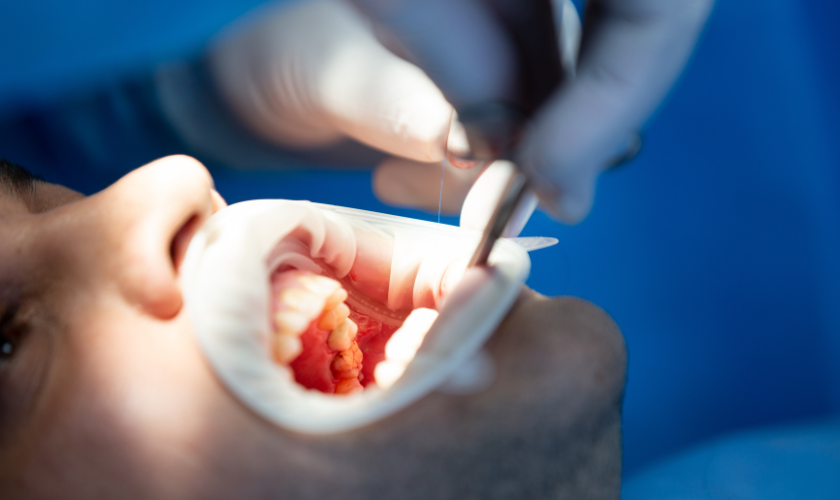
When routine treatment cannot resolve a dental issue, oral surgery may become necessary. Common triggers include impacted teeth, severe decay, jaw misalignment, gum disease, and structural damage from trauma. Each condition varies in severity. Procedures range from simple tooth extractions to full-mouth reconstruction, and the right option depends on the patient’s condition, its severity, and their long-term oral health goals. Here is more information on oral surgery:
What Is Oral Surgery?
Oral surgery refers to any surgical procedure performed on the teeth, gums, jaw, or surrounding structures. Dentists typically recommend it when a condition goes beyond what fillings, crowns, or other non-invasive treatments can address, and the appropriate procedure depends on the issue’s nature and severity. General dentists can perform these procedures. Because the mouth connects to broader systemic health, addressing structural or infection-related issues early helps prevent complications elsewhere in the body, making timely intervention beneficial.
What Are the Different Types?
Oral surgery covers a wide range of procedures, each targeting a distinct problem.
- Root canal therapy: Removes infected or damaged pulp from inside a tooth.
- Full mouth reconstruction: Combines multiple procedures to rebuild and restore function across the entire mouth.
- Bone grafting: Rebuilds jawbone density, often before placing dental implants.
- Gum grafting: Restores receded gum tissue to protect tooth roots.
- Tooth extraction: Removes a tooth that cannot be saved.
Each procedure serves a distinct function, and a dentist matches treatment to the specific diagnosis.
When Is Oral Surgery Needed?
Not every dental problem needs surgical treatment. Dentists generally reserve surgery for cases where non-invasive options have failed, or where the condition poses a risk to long-term oral health. Persistent pain and visible infection are common indicators; structural damage from injury may also signal that surgery is necessary. When multiple symptoms appear together, the likelihood of a surgical recommendation may increase.
Impacted wisdom teeth are a common reason patients undergo oral surgery. Since these teeth often lack room to emerge properly, they can cause crowding, infection, or damage to neighboring teeth. Advanced gum disease and jaw misalignment also require surgical intervention, and severe decay that has reached the tooth’s root may leave surgery as the only viable option. A thorough dental exam determines whether surgery is right.
What Is Recovery Like?
When estimating recovery time, healthcare providers evaluate both the procedure performed and the patient’s overall health. Simple extractions may heal within a week. More complex surgeries, such as bone grafting or full mouth reconstruction, can take several months to heal completely. Swelling and mild discomfort are common, and dietary restrictions are sometimes necessary in the days immediately following surgery.
Dentists usually provide specific aftercare instructions that cover oral hygiene, medication use, and activity restrictions; following these recommendations closely reduces the risk of infection. Patients may return to normal eating and speaking habits within a few weeks. Full bone or tissue regeneration may take longer to stabilize. Because proper aftercare supports healing, following aftercare protocols is key throughout recovery.
Consult a Dentist Today
Oral surgery addresses problems that routine dental care cannot fix, from impacted teeth to significant bone loss. Recognizing the signs early, whether it’s persistent pain, gum recession, or visible damage, allows for quicker diagnosis and treatment planning. Each type of procedure serves a specific purpose, and matching the right treatment to the right condition may lead to better outcomes and shorter recovery periods. If you have ongoing dental discomfort or notice structural changes in your teeth or gums, schedule a consultation with a dentist. A professional evaluation determines whether surgery is necessary and outlines what the treatment and recovery process will involve.
